
3 Unconscious Habits That Create Proximity Bias (And How to Fix Them)
You're a fair leader. You treat everyone on your team the same. Or do you? Proximity bias is the unconscious tendency to favor the people we physically see, and it's likely sabotaging your hybrid team's performance without you even realizing it.
You're a fair leader. You treat everyone on your team the same. Or do you?
Proximity bias is the unconscious tendency to favor the people we physically see, and it's likely sabotaging your hybrid team's performance without you even realizing it. It shows up in the "quick chats" that leave remote employees out of the loop, the high-visibility projects that go to in-office staff, and the performance reviews that are skewed by "face time" instead of actual results.
This isn't a character flaw; it's a brain glitch. But as a leader, it's your job to debug it. Here are three common unconscious habits that create proximity bias and how to fix them.
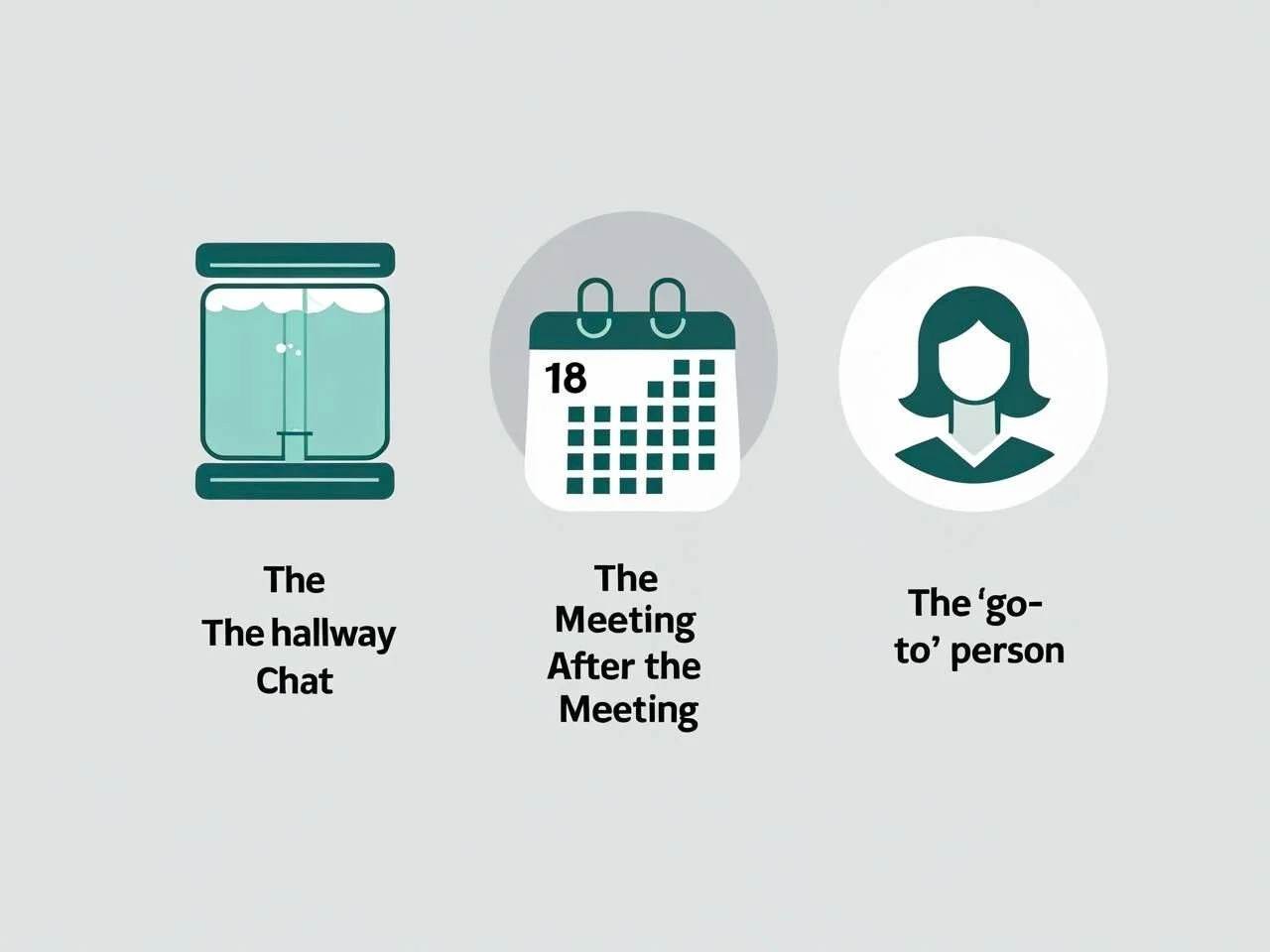
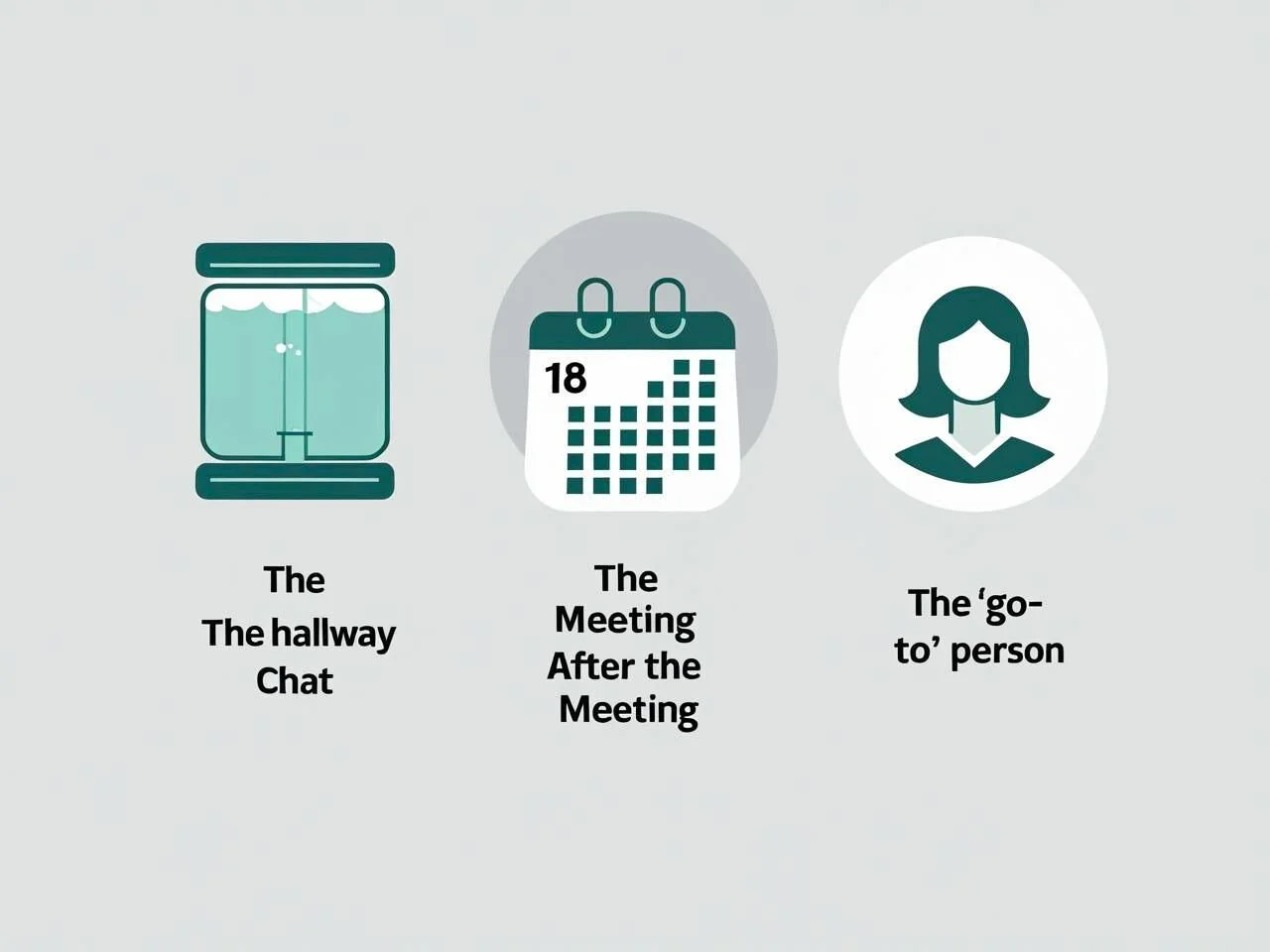
Habit 1: The "Hallway Decision"
You bump into a colleague in the office, make a quick decision about a project, and move on. It's efficient, but you've just excluded every remote member of the team from a key conversation.
The Fix: Implement a "document-first" rule. Any decision, no matter how small, must be documented and shared in a public channel (like Slack or Teams) immediately. This creates a single source of truth and ensures information is distributed equitably, not based on who is standing by the coffee machine.
Habit 2: The "Meeting After the Meeting"
The virtual meeting ends, and you immediately turn to the two people in the conference room with you to debrief. "What did you really think?" This is where the real conversation happens, and your remote team knows it.
The Fix: Make the last five minutes of every meeting a dedicated "digital debrief." Close the informal part of the agenda and explicitly ask, "Okay, let's capture key takeaways and action items in the chat right now." This ensures all final thoughts are shared in the open and that follow-up actions are visible to everyone.
Habit 3: The "Go-To" Person Bias
When a new, urgent project comes up, who is the first person you think of? Often, it's the person you see every day—your "go-to" person. This starves your remote employees of growth opportunities.
The Fix: Replace visibility with data. Before assigning a critical task, consult your team's CliftonStrengths grid. Ask yourself, "What specific talents does this project require?" and assign it to the person whose strengths are the best fit, regardless of their location. This forces you to make objective, data-driven talent decisions, not biased, convenience-based ones.
Becoming a Proximity-Proof Leader™ isn't about treating everyone the same. It's about creating a system where everyone has an equal opportunity to contribute and succeed. It's the most critical skill for any manager in a hybrid world.
Ready to build a truly fair and effective hybrid team?
I am launching the inaugural pilot cohort for The Proximity-Proof Leader™, an intensive 3-month program designed to give you the tactical skills to lead with clarity and confidence. We'll meet every other week in a small group to master these techniques. The pilot investment is just $100/month.
Spots are limited to 8 leaders to ensure a high-touch experience. Click here to learn more and enroll.

Psychological Safety is More Than a Buzzword. Here Are 3 Ways to Actually Build It.
You've heard the phrase a thousand times. You know it's important. But what does building "psychological safety" actually look like on a Tuesday afternoon when your team is facing a tight deadline and a critical problem arises?
You've heard the phrase a thousand times. You know it's important. But what does building "psychological safety" actually look like on a Tuesday afternoon when your team is facing a tight deadline and a critical problem arises?
It's not about being "nice" or avoiding conflict. It's about creating an environment where candor is safe, and taking interpersonal risks feels productive, not dangerous. It's the bedrock of high-performing teams, but it doesn't happen by accident.
Most leaders unintentionally sabotage safety with well-meaning but counterproductive habits. They ask for solutions instead of welcoming problems, reward silence instead of encouraging dissent, and fail to see their people as individuals.
If you're ready to move beyond the buzzword, here are three practical, actionable ways to start building real psychological safety today.
1. Stop Asking for Solutions, Start Rewarding the Truth.
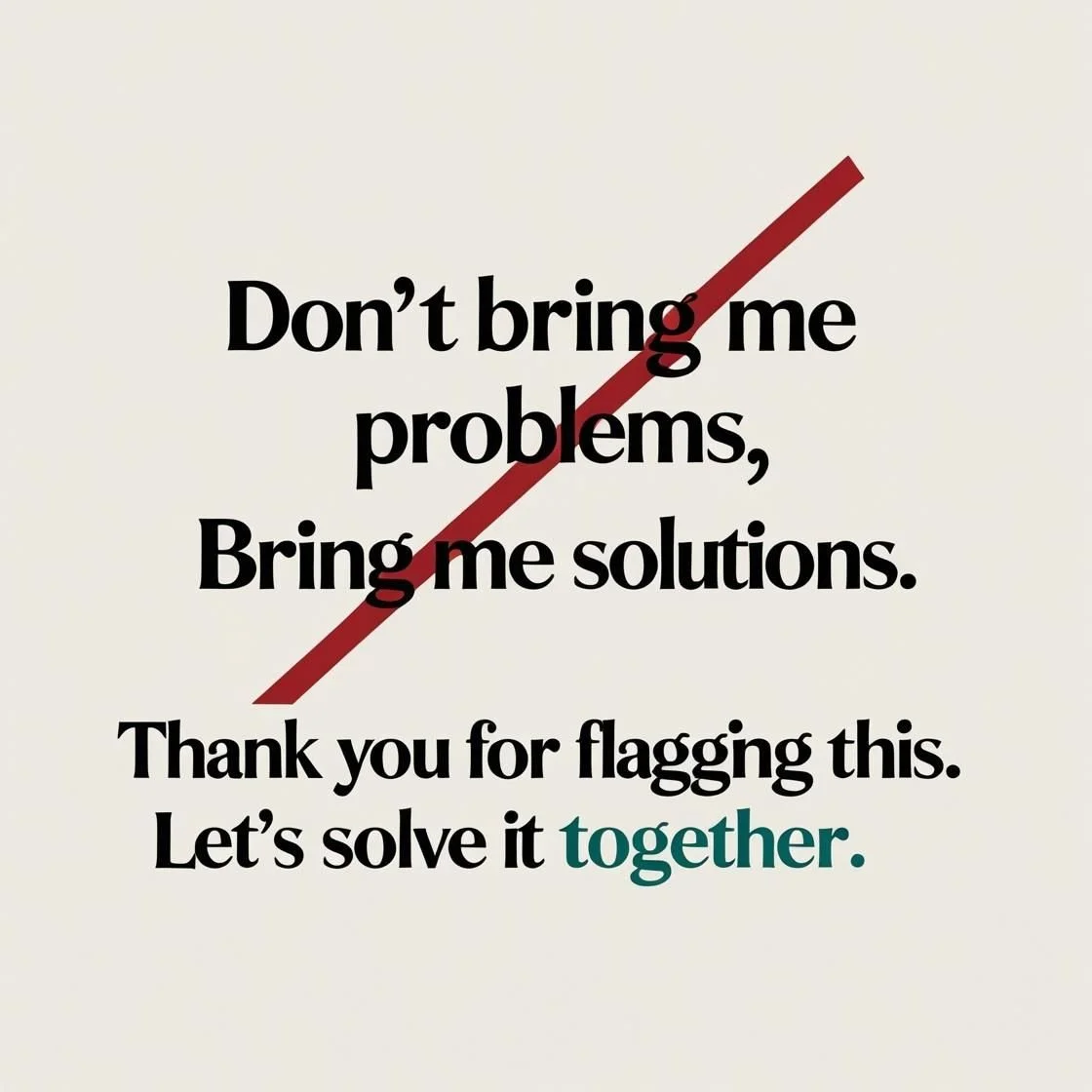
The most common way leaders crush safety is by saying, "Don't bring me problems, bring me solutions." This tells your team that identifying a risk is only valuable if they've already fixed it.
Instead, try this: When a team member flags a concern, make your first words: "Thank you for bringing this to my attention." This simple act validates their courage and encourages others to do the same. Then, follow up with, "Let's walk through this together." This transforms you from a judge into a partner and makes it safe to speak up, even with incomplete information.
2. Make Vulnerability a Leadership Competency.
Your team will not take risks if you don't. As a leader, you must model vulnerability. This doesn't mean oversharing; it means being honest about your own fallibility.
Try this: Start your next team meeting by saying, "Looking back on our last project, I realize I could have been clearer about our goals. That's on me. I want to discuss how we can improve that communication process going forward." By owning a misstep, you give your team permission to be human and to learn from their own mistakes without fear.
3. Recognize the Person, Not Just the Task.
Generic praise like "good job" is nice, but it doesn't build Esteem—a core pillar of psychological safety. Esteem is the feeling of being seen and valued for your unique contributions.
Instead, try this: Use the language of CliftonStrengths to give specific, powerful recognition. "Sarah, the way you used your 'Analytical' talent to find that flaw in the data saved us from a huge mistake. Thank you." This shows you're paying attention not just to the work, but to the unique individual doing the work.
Building psychological safety is a skill. It requires practice, intention, and a framework for success. When you master it, you unlock the full intelligence, creativity, and performance of your entire team.
Ready to master this skill?
I am launching the inaugural pilot cohort for The S.A.F.E.T.Y. Accelerator™, an intensive 3-month program for a small group of leaders dedicated to building a culture of trust. We'll meet every other week to turn these concepts into your leadership reality. The pilot investment is just $100/month.
Spots are limited to 8 leaders to ensure a high-touch experience. Click here to learn more and enroll.
Stop Guessing, Start Coaching: How to Use CliftonStrengths to Unlock Your Team's Potential

You have a talented team, but something isn't clicking. Projects stall, communication breaks down, and you feel like you're constantly putting out fires instead of leading strategically. You know your team is capable of more, but you don't know how to unlock it.
The problem is that you're managing the "what"—the tasks, the deadlines, the projects—without a clear understanding of the "how." How does your team naturally think, communicate, and get things done?
This is where strengths-based leadership, powered by a tool like Gallup's CliftonStrengths, transforms everything. It gives you a user manual for your team, allowing you to stop guessing and start coaching with precision.
Here are three ways you can use CliftonStrengths to immediately increase your team's effectiveness.
1. Delegate Smarter, Not Harder
Stop assigning tasks based on who has the most bandwidth. Start aligning work with natural talent. Have a project that requires building consensus and getting buy-in from other departments? Give it to the person with high 'Influencing' talents like "Woo" or "Communication." Need someone to think through all the potential risks of a new plan? Tap your team member with "Deliberative" or "Analytical." When you delegate to a person's strengths, you're not just giving them a task; you're giving them energy.
2. Transform Your 1:1s
Most 1:1 meetings are boring status updates. A strengths-based 1:1 is a powerful coaching conversation. Instead of just asking "What are you working on?", you can ask questions like:
"Which of your strengths did you get to use most this week?"
"I saw your 'Achiever' strength in action on that project. How did that feel?"
"Is there any part of your role that feels like it's draining your energy? Let's see if we can reshape it to better fit your talents."
These conversations build self-awareness and show your team members that you see and value them as individuals.
3. Build Complementary Partnerships
Struggling with a team member who is a brilliant big-picture thinker ("Ideation," "Futuristic") but struggles with details and execution? Don't try to "fix" their weakness. Instead, partner them with someone who has strong "Executing" talents like "Discipline" or "Responsibility." By creating these complementary partnerships, you leverage the collective strength of the team, cover for individual gaps, and build a culture of interdependence.
Leading with strengths is the fastest path to building a team that is engaged, effective, and confident. It allows you to be the coach your team deserves—one who develops talent instead of just managing tasks.
Using Strengths is the foundation of our work in both our S.A.F.E.T.Y. and Hybrid Leadership programs. If you're ready to lead with this level of insight, let's talk.
Beyond Buzzwords: 3 Practical Ways to Build Real Psychological Safety on Your Team
The most dangerous phrase in business isn't what you think. It's the seemingly innocent advice you've probably given or received: "Don't bring me problems, bring me solutions."

The most dangerous phrase in business isn't what you think. It's the seemingly innocent advice you've probably given or received: "Don't bring me problems, bring me solutions."
While it sounds proactive and empowering, this single phrase quietly strangles the life out of psychological safety. It tells your team that identifying a risk isn't valuable unless you've already solved it. It punishes the messenger who spots a fire but hasn't yet found the extinguisher. The result? People stop raising their hands. Small problems fester into full-blown crises, and you, the leader, are the last to know.
Psychological safety isn't about being "nice" or avoiding tough conversations. It's the shared belief that it's safe to take interpersonal risks. It’s the foundation that allows teams to innovate faster, learn from mistakes, and engage in the healthy conflict necessary for growth.
Building it requires more than just buzzwords. It requires intentional action. Here are three practical ways to start building real psychological safety today.
1. Reframe the Problem: Reward the Messenger
Instead of asking for solutions, start by rewarding the act of identification. When a team member flags a potential issue, your first response sets the tone for everyone else.
Old Way: "Okay, so what's your plan to fix it?"
New Way: "Thank you for bringing this to my attention. This is exactly the kind of thing we need to be aware of. Let's walk through it together."
This simple shift encourages vigilance and makes it safe to be the one to point out that the emperor has no clothes. It transforms you from a judge into a collaborative problem-solver.
2. Model Vulnerability (Without Oversharing)
Your team won't take risks if you don't. Modeling vulnerability doesn't mean sharing deeply personal stories; it means being open about your own fallibility as a leader.
Start a meeting by saying, "I've been thinking about the launch last month, and I think I could have done a better job communicating the timeline. I'd like to get your thoughts on how we can improve that process."
Admit when you don't have the answer. "That's a great question. I don't have the data on that right now, but I will find out and get back to you."
When you model that it's okay not to be perfect, you give your team permission to be human, too.
3. Create Multiple Pathways for Contribution
Not everyone thrives in a fast-paced, verbal brainstorm. The "loudest voice wins" approach silences your introverts, deep thinkers, and remote employees. To build true safety, you must create different ways for people to contribute their ideas.
Before the Meeting: Send out the agenda with key questions and a link to a shared document. Ask team members to add their initial thoughts before the meeting begins.
During the Meeting: Use round-robin techniques where you go around the "room" (virtual or physical) and explicitly ask each person for their thoughts on a specific topic.
After the Meeting: Follow up with a summary and create an opportunity for people to add further reflections or ideas via email or a shared channel after they've had time to process.
Building a psychologically safe culture is the single most impactful investment you can make in your team's performance. It's a journey that moves from theory to transformation.
If you're ready to take that journey, learn more about how our S.A.F.E.T.Y. Accelerator™ program can give you the framework and tools to build a truly high-performing team.